Since the explosion of GPT-3.5, in just over a year, the application of large language models has expanded from the geek community to a broader audience. From my personal experience, the scope of technology application has gradually widened, with more and more devices and applications beginning to reflect the integration of these technologies in their details.
Areas of Change
Translation
The most noticeable change is in the field of translation. From video subtitles and multilingual book translations to audio and video content, language barriers have almost disappeared.
Developers are also enthusiastic about launching various applications to address translation needs in different scenarios. For example, new software for video subtitle translation and book translation allows ordinary users to obtain satisfactory translation results with almost a single click.
Being able to use new tools to access more cultures is also a benefit of technological progress.
Programming Assistants
Another area with significant change is programming assistance. As model capabilities have improved, tools like Cursor and GitHub Copilot have evolved from initially providing small code completions to helping write code for small modules.
As a product person with a computer background, although my coding skills are limited, I have some development experience and understand the basic composition of features. AI assistants have become excellent tools in this regard, helping me write small functions and tools, making the entire user experience quite nice.
The most delightful surprise is that new technologies make web development more accessible. Through browser extensions and local web pages, they better address needs without requiring one to learn a whole set of supporting technologies to get things done.
Writing Assistants
Writing is an important scenario where I hoped AI could assist me, but in this field, AI’s help is relatively limited. Currently, it can only provide some information as a reference for writing and help polish the expression of articles.
To achieve an effect similar to code completion, AI needs a deeper understanding of semantics to provide more valuable suggestions. But at this stage, it’s not yet capable of that.
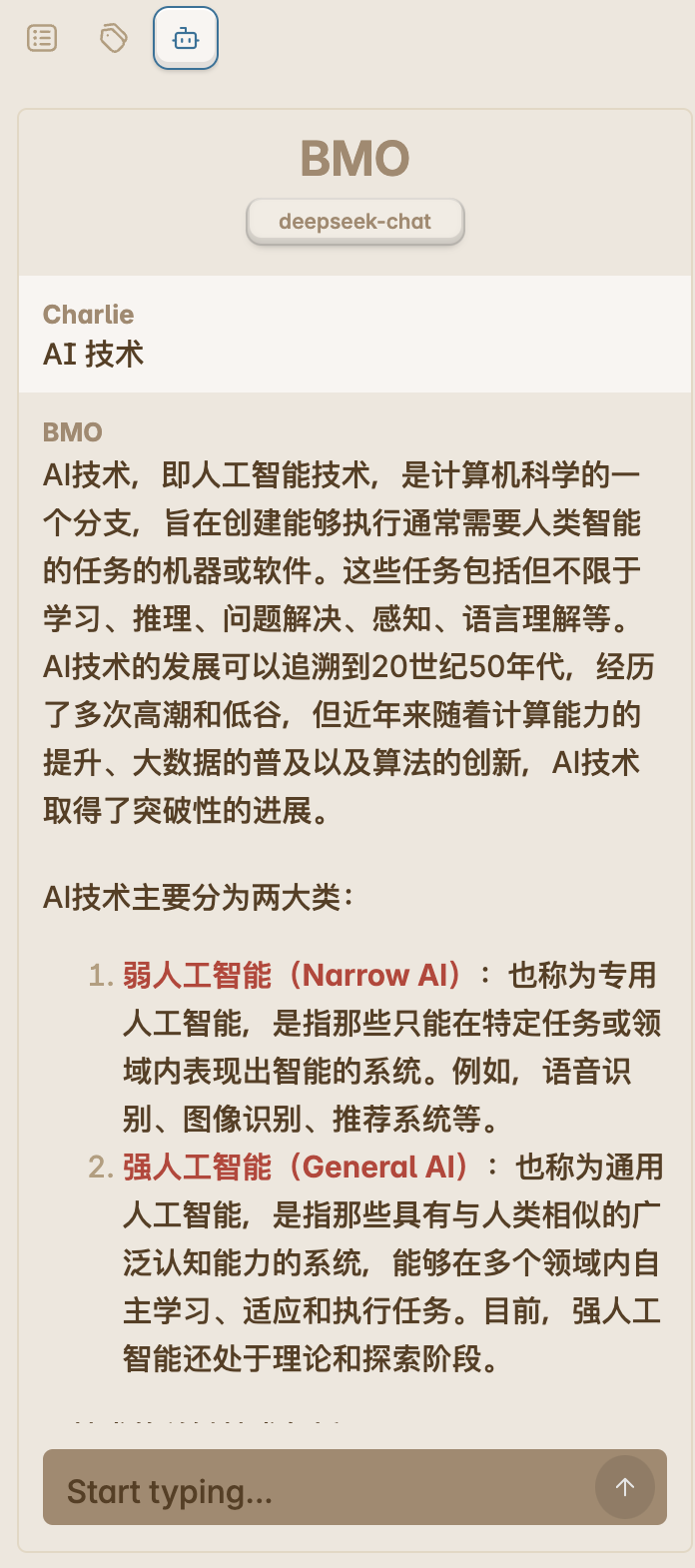
(The image above shows using the BMO plugin for Obsidian, which can be configured to use cloud-based large models via API.)
Local Large Models
Applications based on local models on the device side, with Ollama being the most famous among them. I’ve also written a tutorial on its use: Ollama Local Large Model Deployment Tutorial
Advantages: Fast, not affected by network issues.
Disadvantages: Some translations may not be precise enough, given the model size is only 7B.
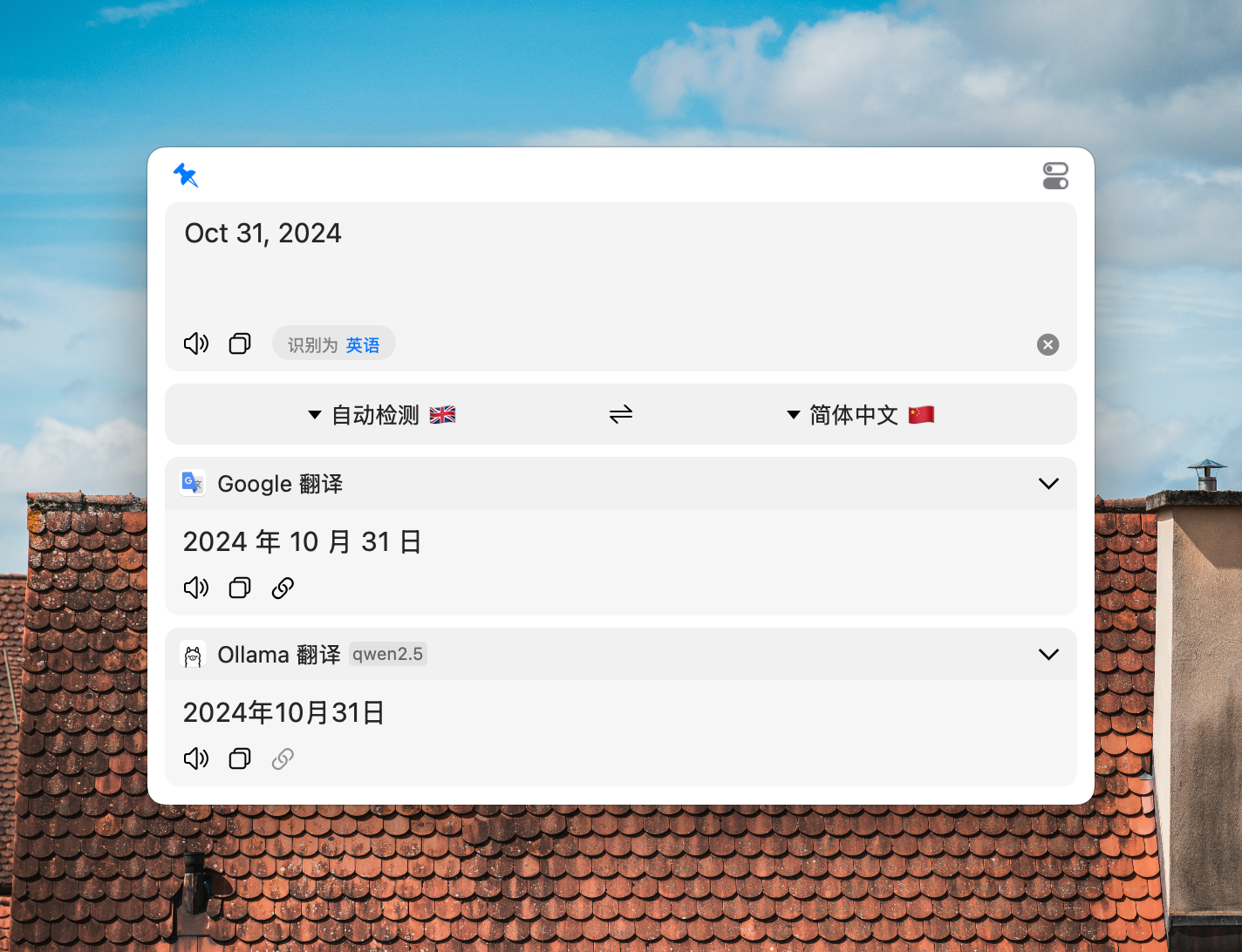
(The image above shows translation using Ollama’s qwen2.5 model.)
In the coming years, hardware manufacturers may integrate smaller models into devices, allowing users to enjoy AI services almost imperceptibly. Only then can AI be considered truly integrated into our lives.
Cloud Models
Currently, cloud model service providers typically offer web UIs and APIs for both the general public and technical developers. After a year of development, these vendors have begun embedding AI features into devices through applications, such as the ChatGPT Mac client, where a small dialog box can be summoned with a hotkey to get answers.

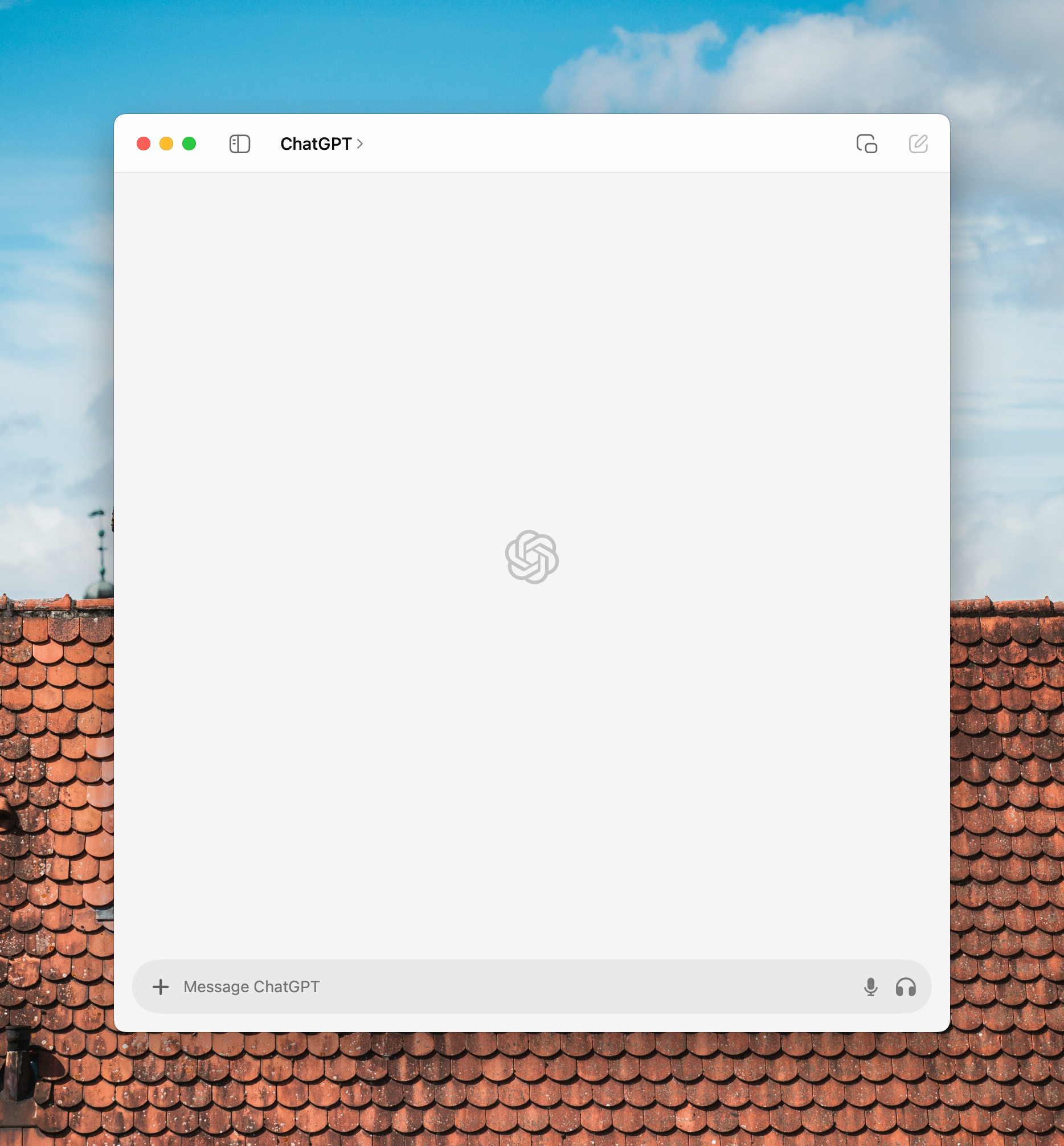
(The image above shows the ChatGPT Mac client.)
In the coming years, cloud models will provide more concise prompts, more accurate answers, and support for more forms of content input (such as images, audio, video). Currently, these media contents serve more as input data for large models, and the user feedback experience has not yet reached an ideal state.
The Hallucination Problem
The hallucination problem still exists but has improved. We need to adjust our expectations before use. The model’s role is to help collect and summarize information, saving time; the results are not necessarily 100% accurate. Don’t waste energy criticizing the accuracy of large models and miss out on what’s truly valuable.
Major vendors are also optimizing result accuracy to improve credibility. It is foreseeable that in the coming years, the hallucination problem will gradually ease. Perhaps one day we will be able to fully trust AI’s suggestions, and then AGI (Artificial General Intelligence) will officially enter our lives.
The Future
Over the past year, I have consistently used AI technology at a high frequency and gradually understood the capabilities and boundaries of large models. Knowing what they can do is very important. Creating within the technological framework may become our new normal.
Stay open, keep iterating, embrace change, and I wish you happiness! Thank you for your time!
This site’s RSS address has been updated. Please resubscribe, dear readers!
💡 Thank you for reading! Feel free to share the article or write to me to exchange ideas.